These Are the Golf Drills I Would Actually Tell Someone to Run Tonight
If a home drill does not give you a number to beat, it is usually just organized fidgeting. The upside of practicing at home is not convenience alone. It is repetition without the noise of a range bucket, a crowded short-game area, or the temptation to keep smashing balls because one swing felt good.
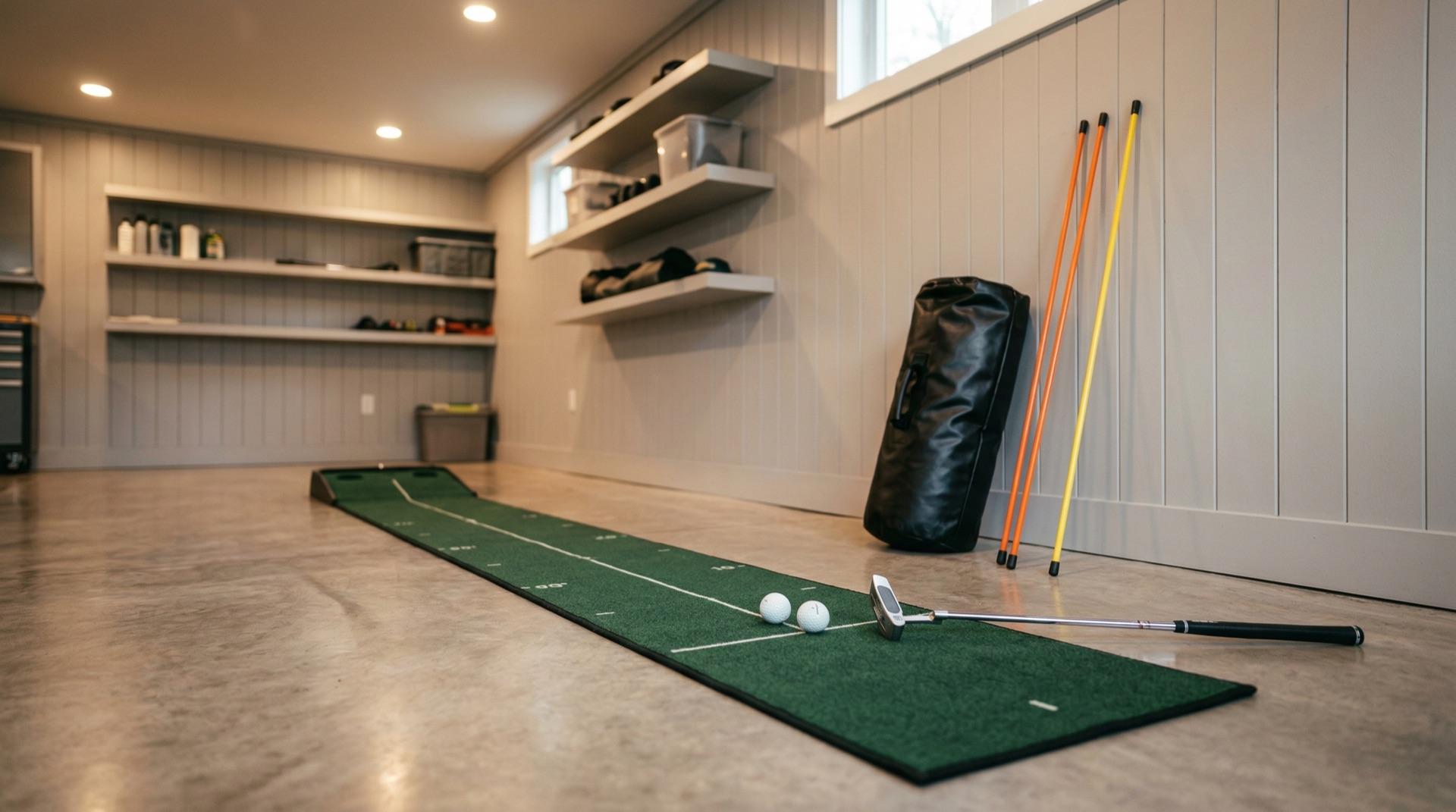
The five drills below are built for exactly that kind of session. They fit in a hallway, garage, office, or living room. They ask for simple tools. More importantly, they tell you when the rep was good enough to count. The first one starts here because it is the fastest score-lowering habit most golfers can install.
Drill 1: The Quarter Ladder Start-Line Drill
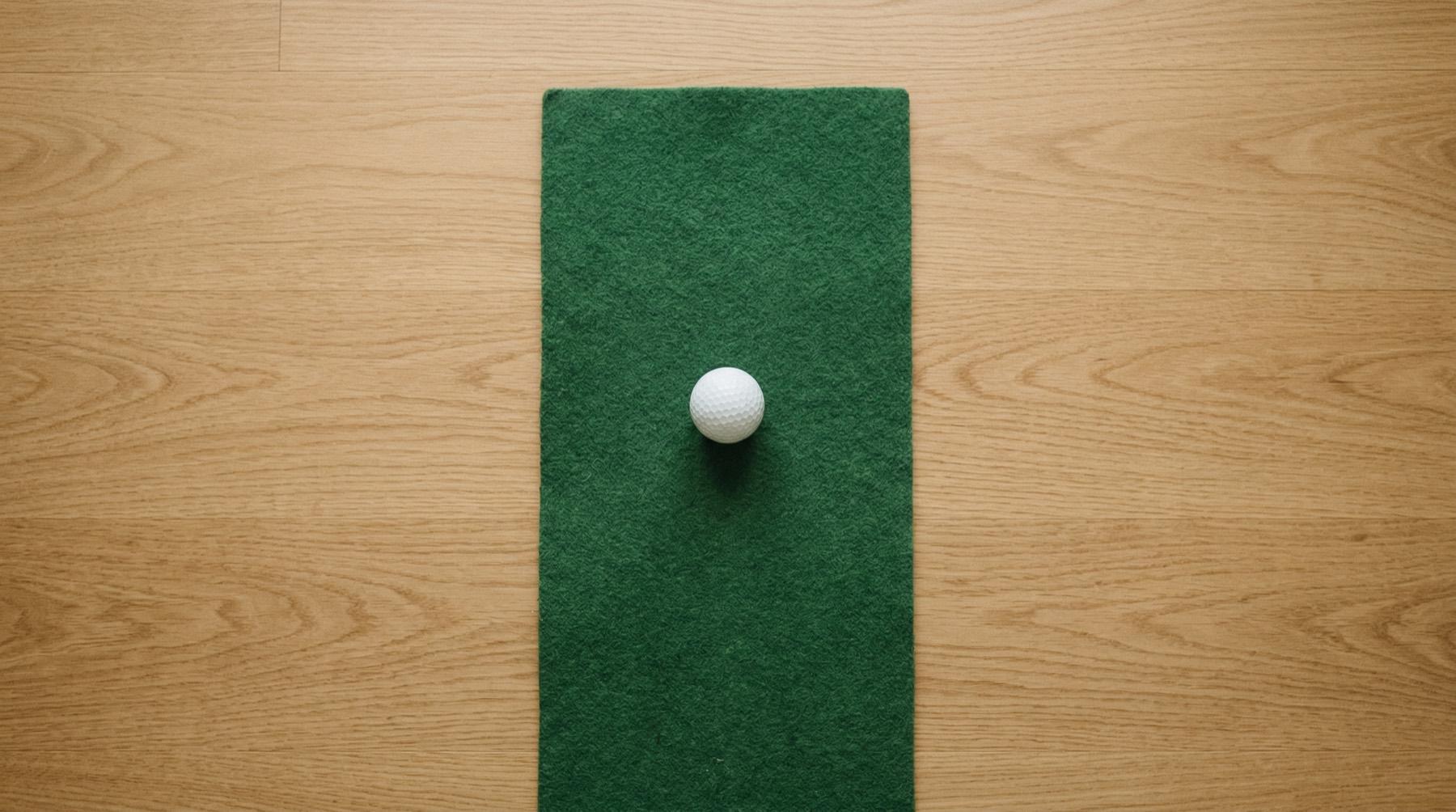
Put a quarter on the floor six feet away. Your job is not just to hit it. Your job is to roll the ball with enough pace that it would die near the hole on a real green, not blast through the target and call it accuracy. That is why this drill works so well at home: it trains pace and start line in the same rep instead of treating them like separate skills.
- Benchmark: Stop 7 of 10 balls within a putter-head width of the quarter from six feet.
- Progression level: Level 1 foundation. When you hit the benchmark in back-to-back sets, move to eight feet or tighten the stop zone to a coin-sized halo.
- Common mistake: Trying to hit the coin hard enough to hear it instead of rolling the ball with realistic capture speed.
- Time per block: 5 minutes, usually three sets of 10 balls with 20 to 30 seconds between sets.
Most golfers get impatient and turn this into a make-the-coin contest. Resist that. If the ball starts a hair offline or dies two feet short, the rep failed even if it brushed the edge of the target. Good home putting work is supposed to feel a little unforgiving.
Drill 2: The Gate Drill for Face and Path
Lay two alignment sticks, rulers, or books on the floor to create a channel just wider than your putter head. Then stroke the putter through the gate without grazing either side. This is the cleanest home drill I know for telling you whether your stroke actually returns square or whether it only feels square because the ball went roughly in the right direction.
- Benchmark: Complete 16 clean passes out of 20 without touching the gate.
- Progression level: Level 2 precision. Narrow the gate slightly once you clear 16 of 20 twice in a row.
- Common mistake: Speeding up the stroke as fatigue sets in and calling the extra noise 'tempo.'
- Time per block: 5 minutes or two rounds of 20 strokes.
If you want something more durable than household objects, this is one of the few places where a dedicated putting trainer helps naturally. A Putting Arc T3 gives the drill cleaner rail feedback without changing the purpose of the rep.
Drill 3: The Towel Landing-Zone Drill
Put a bath towel on the floor or on a strip of turf ten to fifteen feet away and chip foam or low-flight balls so they land on the fabric. The point is not that the towel is magical. The point is that it forces you to choose a landing spot before the club moves. That one choice cleans up a huge amount of sloppy short-game thinking.
- Benchmark: Land 6 of 10 balls on the towel before moving it farther away.
- Progression level: Level 2 touch control. Fold the towel in half, move it back, or alternate two lofts after you own the base version.
- Common mistake: Watching the towel and forgetting to rehearse trajectory, so every rep comes out with the same flat flight.
- Time per block: 5 minutes or two sets of 10 chips.
If you move this drill outside and want a target that travels better than a towel, eGolfRing Golf Target Rings is a natural upgrade because it keeps the landing-zone idea intact instead of turning the drill into equipment theater.
Drill 4: The Pause-and-Go Tempo Drill
Grab an alignment stick, broom handle, or club. Make a three-quarter backswing, pause for a full two count at the top, then swing through to a finish you can hold without wobbling. This drill is less about looking pretty and more about exposing the place where many amateur swings rush: the transition.
- Benchmark: Hold a balanced finish for 7 of 8 reps in each set.
- Progression level: Level 2 sequencing. Start with a stick, then move to soft half-swings with a short iron once the pause stops feeling artificial.
- Common mistake: Turning the pause into a quick bounce, which keeps the same rushed transition you were trying to fix.
- Time per block: 4 to 5 minutes, usually three sets of eight reps.
The right feel here is organized, not frozen. If the pause makes the swing look robotic, shorten the backswing a touch and get the finish under control before adding speed.
Drill 5: The Mirror Setup Reset
Stand in front of a mirror and build your address position from scratch: posture, knee flex, ball position, handle height, and shoulder tilt. Then step away, reset, and do it again. This sounds almost too basic to count as a drill, which is exactly why golfers skip it and then wonder why nothing else feels stable from day to day.
- Benchmark: Recreate your address position correctly on 8 of 10 resets without needing a second look.
- Progression level: Level 1 calibration. Advance by switching clubs between reps and matching ball position without checking first.
- Common mistake: Treating the mirror like a static pose instead of a rebuild drill with a clear reset between reps.
- Time per block: 3 to 4 minutes or 10 full resets.
This is the drill that makes the other four cleaner. Better setup does not just help full-swing mechanics. It sharpens pace, landing spot awareness, and the quality of your rehearsals because the body keeps starting from the same coordinates.
The 25-Minute Performance Lab Session
If you want a ready-made routine instead of five separate ideas, run the drills in this order. The sequence starts with setup, moves through scoring shots, and finishes with tempo so you leave the session feeling organized instead of sped up.
- 3 minutes on Mirror Setup Reset to establish posture and ball-position checkpoints.
- 6 minutes on the Quarter Ladder to wake up pace and start-line discipline.
- 5 minutes on the Gate Drill to tighten face control while the stroke is still fresh.
- 6 minutes on the Towel Landing-Zone Drill for touch and low-point awareness.
- 5 minutes on the Pause-and-Go Tempo Drill to finish with a cleaner transition pattern.
Run that session three times a week and it becomes a real training block, not just something you do when the weather is bad. It also scales cleanly. On a busy day, pick the first two blocks and keep your notebook. On a longer day, run the whole plan twice with a short break in the middle.
Track Your Numbers
The easiest way to waste a good drill is to never write anything down. Keep a note in your phone or a cheap paper notebook and log the same five scores every time:
- Quarter Ladder: how many of 10 finished inside the stop zone.
- Gate Drill: how many clean strokes out of 20 passed through the channel.
- Towel Drill: how many of 10 chips landed on the target.
- Tempo Drill: how many finishes per set you held without wobble.
- Mirror Reset: how many address rebuilds out of 10 were correct on the first look.
After two weeks, patterns show up quickly. Maybe your putting numbers climb while the towel drill stalls. Maybe the tempo work is clean but your setup resets are inconsistent, which tells you the motion still starts from a moving target. Those are useful answers. They tell you where the next block of reps should go.
How to Progress This Plan Over Two Weeks
A lot of golfers sabotage home practice by changing everything at once. New drill, new target, new club, new room, new idea. Then they wonder why the scores on their notebook never mean anything. The better move is to keep the environment stable long enough for the benchmark to become honest.
For the first week, run the base version of all five drills and do not get cute with progressions. Let the first three sessions show you your real starting numbers. In week two, only progress the drills where you cleared the benchmark twice. If the Quarter Ladder is moving but the towel drill is stuck, good. Leave the towel drill alone and keep pressing the part of the plan that earned the next layer.
This matters because progression is supposed to sharpen the drill, not randomize it. Move one variable only: distance, target size, club choice, or setup precision. If you change two or three things at once, you stop training and start guessing.
When to Shut a Block Down
One of the hardest parts of solo practice is knowing when more reps are helping and when they are just making the pattern sloppier. A good rule is this: if the benchmark drops because you lost focus, reset and keep going. If it drops because you are now rushing, steering, or inventing a new motion to save the score, end the block.
That is especially true for tempo work and short-game touch. Ten great reps and a clean number are worth more than thirty reps where the last twenty taught your body how to survive a tired motion. Home practice works because you can stop before the quality falls off a cliff. Use that advantage.
What to Do Next
If you want to build a more permanent station around these drills, start with our home golf training equipment guide. If the bigger question is which kind of aid actually fits your game, use the golf training aid buying guide.