
You shut off the Masters broadcast and your own golf suddenly looks a little dishonest. The putts you usually call fine look slow. The wedge game you defend looks loose. The swing thoughts you were clinging to on Wednesday feel flimsy after four days of watching players handle speed, slope, pressure, and consequence without blinking.
That feeling is useful. It just does not last. Give it two days and it turns into saved clips, half-made plans, and the same range session you always run. The better move is to turn the tournament into a work week before the charge leaves your system. That is what this article is for.
The 48-Hour Window After the Masters
There is a short stretch after a big tournament when your standards are sharper than usual. You notice how lazy your pace control has gotten. You notice how often you aim at a broad area instead of a real landing spot. You notice how quickly your practice drifts from one problem to the next without ever staying on one long enough to fix it.
That is the right time to train because the contrast is fresh. What you watched is still sitting next to what you actually do. The mistake is turning that contrast into a full swing rebuild. Broadcast golf does not mean you need ten new positions. It usually means you need better reps on the shots that decide whether a round stays calm or gets away from you.
If you want a broader drill menu after this sprint, the place to start is our full at-home golf drills library. What follows here is narrower on purpose: one motivated week, five focused sessions, no fluff.
What Augusta Teaches You About Your Own Game
Augusta does not just show you beautiful golf. It shows you what gets exposed when the surfaces get fast, the targets get tight, and the hole starts asking for a specific ball flight instead of a hopeful one.
On the greens, you notice speed before you notice line. The break matters, but bad pace makes the break meaningless. Watching putts finish a foot past the hole or die into the high side is a reminder that most amateur putting problems start with how the ball arrives, not with a mysterious read.
On approach shots, the lesson is precision. The impressive part is not that the ball lands near the flag. It is that the ball lands on the exact shelf, window, or bounce spot the player chose before the club moved. That is a target habit more than a talent trick.
On tee shots, shaping is really about awareness. A televised draw around a corner looks glamorous, but the useful takeaway for home practice is simpler: start line, face control, and where your path wants to live when you set up for a particular window.
Around the greens, every ugly runoff tells the same truth. Short-game saves are contact first, creativity second. Before you can be imaginative, you have to know you can strike the ball cleanly from a bad lie without panicking.
Then there is composure. You watch a player make bogey, walk to the next tee, and keep the routine the same. That is not a personality trait. It is trained behavior. The home version is simple: one drill, one score, no bouncing around because the first five reps felt awkward.
Putting: What the Greens at Augusta Reveal About Your Speed Control
Fast greens punish the same mistake every time: you hit putts with one stock speed and hope the read carries the rest. That is why the first session in this plan is about distance control, not mechanics. If tournament golf made anything obvious, it is that speed turns stressful putts into manageable ones and bad pace turns makeable putts into work.
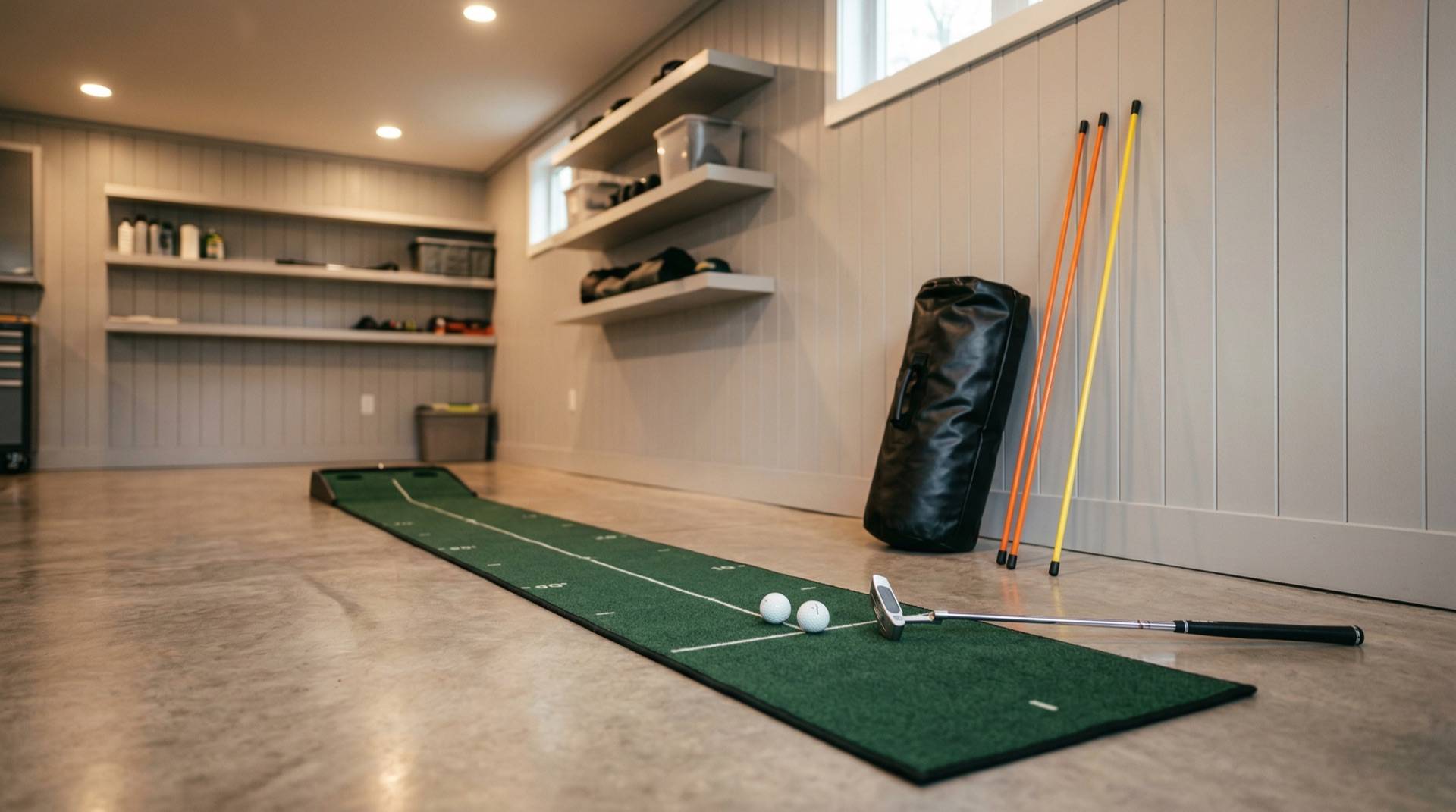
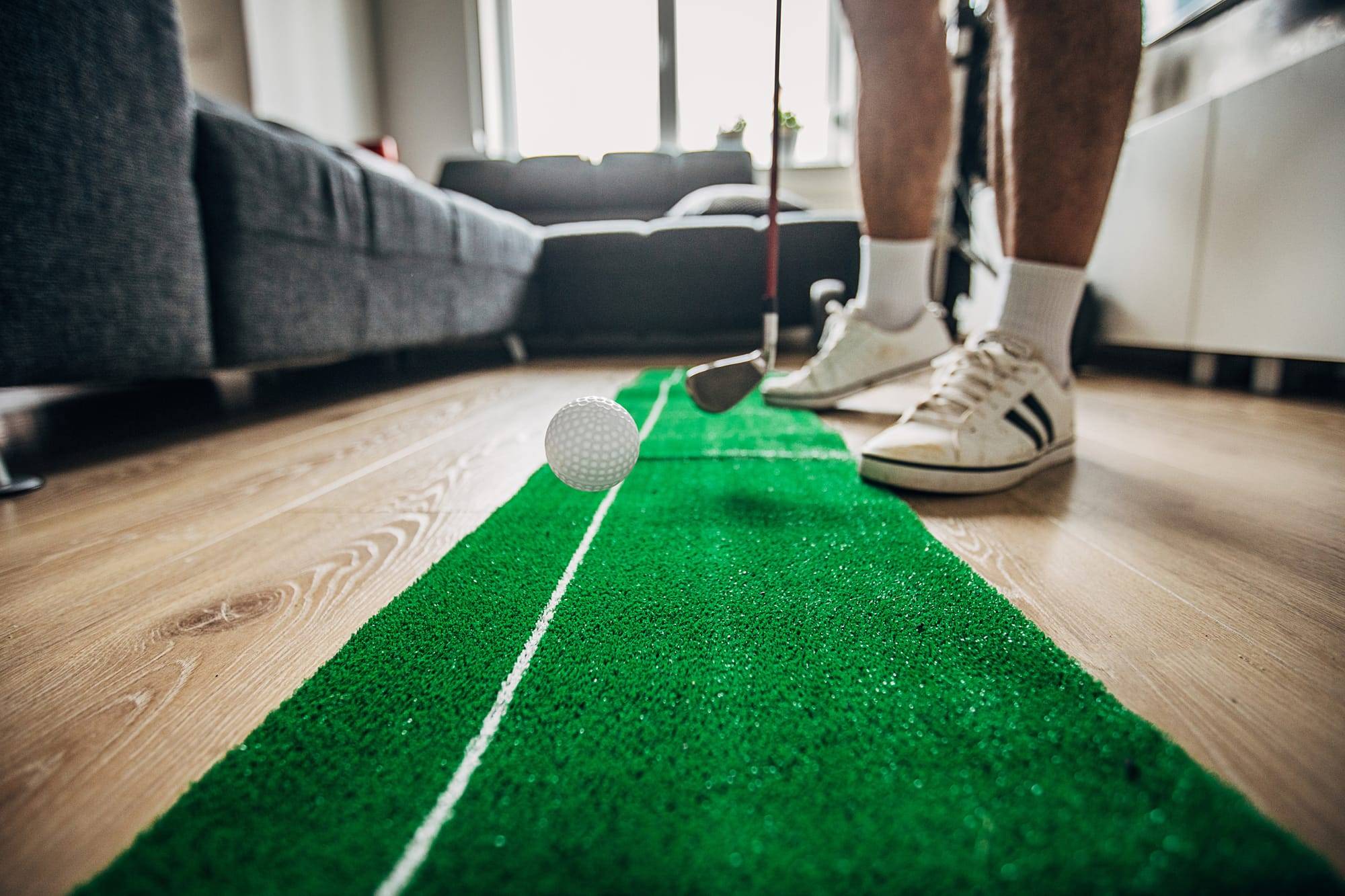
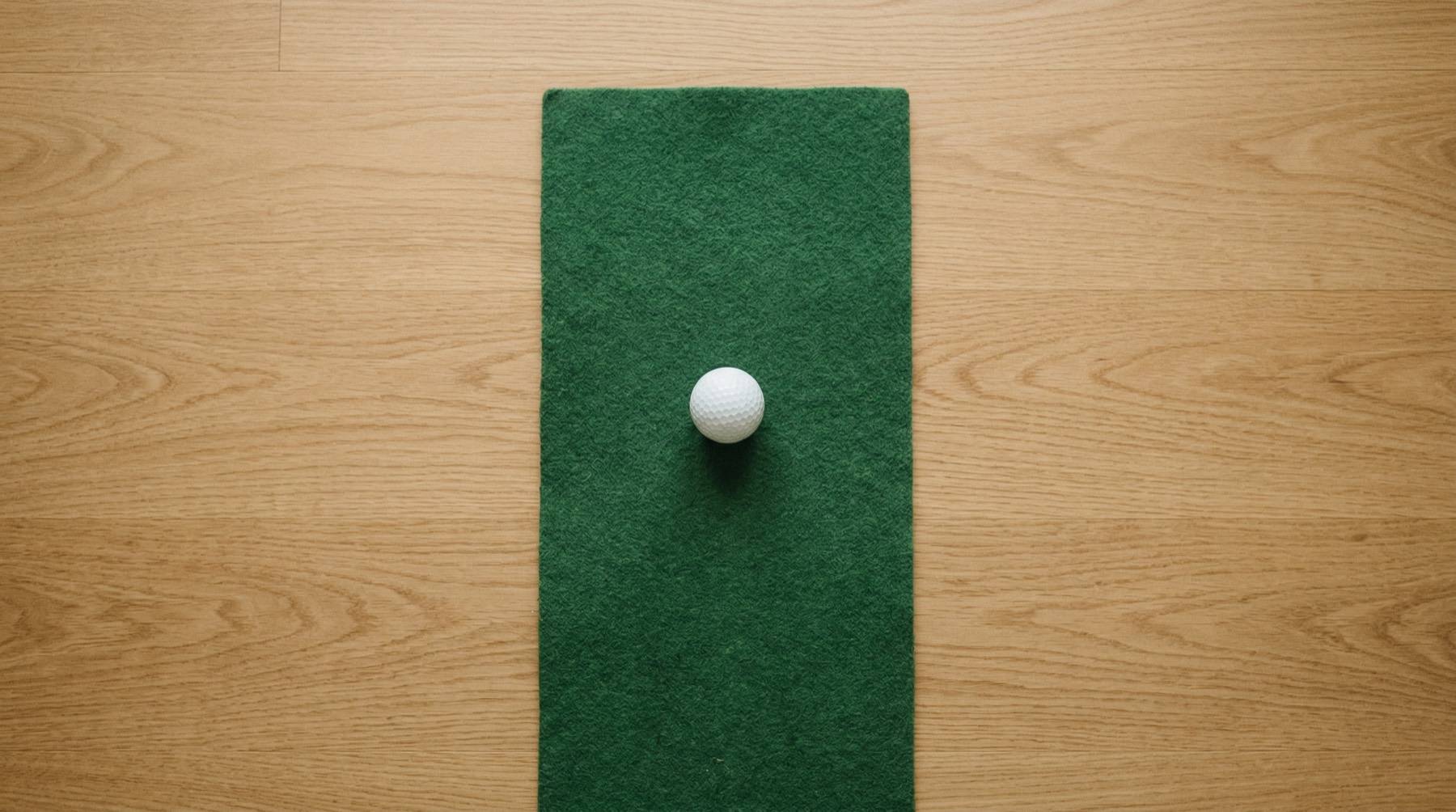
At home, you can train this with almost no setup. Put down three stop zones at increasing distances on carpet, a mat, or a strip of turf. Roll three balls to each zone. The rep only counts if the ball finishes inside the lane you picked. No second stroke. No forgiveness because the line felt nice. If the pace is wrong, the rep failed.
Finish the block with short putts because Augusta always brings that part of the game into focus too. After a long-lag session, hit ten straight putts from three or four feet and make yourself clear the full set before leaving. That little dose of cleanup work is how speed practice starts affecting scores instead of just feeling respectable.
Approach Shots and Short Game: Precision Under Pressure
The second big lesson from the Masters is that good golf looks specific. Approach shots fly at windows. Chips land on spots. Recovery shots carry a clear picture before the swing starts. If your normal practice is just hitting balls toward a general area, this is the week to stop doing that.
For approach work, give yourself a landing zone, not a dream outcome. Use a towel, tape box, chalk square, or small mat and judge the rep by whether the ball landed where you planned. If you are indoors, foam balls or rehearsals are fine. The point is training the eye and the strike together. You are telling your body that target selection comes first and motion follows.
For tee-shot shaping, use alignment work instead of pretending you need to hit tour-caliber curves in the garage. Build two start-line windows: one for a stock draw picture and one for a stock fade picture. Rehearse setup, clubface intention, and the shape of the start line. If you are hitting into a net, judge success by whether the ball starts through the correct gate. If you are rehearsing without a ball, judge success by whether the motion stays committed to one picture.
For short game, make the lie part of the drill. Chip one ball from a clean lie, one with the ball slightly above your feet, one from a tight patch, then repeat. Variable lies force honesty. They also keep you from grading your touch too kindly when the real issue was contact all along.
The Masters Week Reset: A 5-Day Home Practice Sprint
Run this Monday through Friday. Every session is twenty minutes. Every session has one job. That is the whole point. You already got the inspiration from the tournament. Now you need a structure sturdy enough to hold it.
Monday: Pace Control Reset
Start the week with the skill the broadcast made impossible to ignore. Put down three distance-control zones and spend the first fifteen minutes laddering three balls through them. Use the last five minutes on short-putt cleanup from three to four feet.
- Session: 15 minutes of lag-putt ladders and 5 minutes of short-putt cleanup.
- Benchmark: At least 6 of 9 lag putts finish in the stop zones, then 10 made short putts in a row before you leave.
- Do not do this: Do not turn the short putts into mindless cleanup after missing the pace benchmark. Earn the finish.
Tuesday: Landing-Zone Precision
Pick one wedge length or one chip trajectory and give yourself a small landing area. This is the session for watching the ball land where you intended, not somewhere in the neighborhood. If you are indoors, throw a foam ball or chip to a towel. If you have a net, keep the target image on the floor in front of you.
- Session: 20 minutes on one landing zone from one distance, with the same club for the first half and a second club for the second half.
- Benchmark: Land 6 of 10 in the zone with the first club and 5 of 10 with the second without losing strike quality.
- Do not do this: Do not move the target every few reps because the current version feels hard. Keep the picture steady.
Wednesday: Tee-Shot Shape Awareness
This is not a hero-shot day. It is an alignment day. Build a draw window and a fade window with floor lines or alignment sticks. Rehearse five reps into one window, five into the other, then alternate. If you are hitting balls, all you care about is start line and whether the motion matched the picture you chose before the takeaway.
- Session: Three rounds of start-line work: draw picture, fade picture, then alternating reps.
- Benchmark: Hit or rehearse 8 of 10 committed reps through the intended gate in the final round.
- Do not do this: Do not chase curvature. Start line and setup awareness come first.
Thursday: Up-and-Down Contact Day
Build three ugly lies on purpose and chip from all of them. Tight lie. Slightly buried lie. Ball sitting up. Tournament golf makes short-game saves look artistic, but the home version starts with getting the strike under control before you ask for touch.
- Session: Two rounds of 9 chips, rotating through three lie conditions with one landing zone.
- Benchmark: Produce at least 12 clean strikes out of 18 and land 8 total balls on the chosen spot or just beyond it.
- Do not do this: Do not judge the session only by where the ball finishes. Thin or heavy contact still counts as a failed rep.
Friday: Composure Combine
End the week with discipline. Pick one putting drill, one landing-zone drill, and one start-line drill. Run them in that order with a notebook beside you. One rep at a time. Full routine. No jumping to something else because the middle block annoyed you. This is where the practice week starts feeling more like golf and less like a pile of reps.
- Session: Three six-minute blocks with a one-minute reset between them, scored in writing.
- Benchmark: Beat Monday's or Tuesday's best score in at least one block while keeping the same routine from start to finish.
- Do not do this: Do not add extra reps after the score is set. Take the number and move on.
Making It Stick Beyond Masters Week
If one of those five sessions clearly exposed the leak in your game, keep that block alive for another two weeks. That is how a tournament spark becomes an actual practice habit. If you need a longer runway, start with our home golf equipment guide to build a cleaner setup, or use our golf training aid buying framework if you are unsure what deserves your money. If the week exposed one specific full-swing leak, our best golf training aids guide narrows the choice to one tool per miss pattern.
The main thing is not to waste the feeling. Tournament golf gives you a clean picture of what better looks like. Your job is to narrow that picture into one week of honest work, then keep the useful part. If you want to keep building from there, explore the full golf training collection.